

Getting an EV charger fitted at home
A home charger is a fixed electrical installation, not something you plug in. It runs back to your consumer unit on its own circuit, with its own protection, and it is tested and certified when it is finished. Home EV charger installation is available across Redhill, Reigate and nearby areas of Surrey.
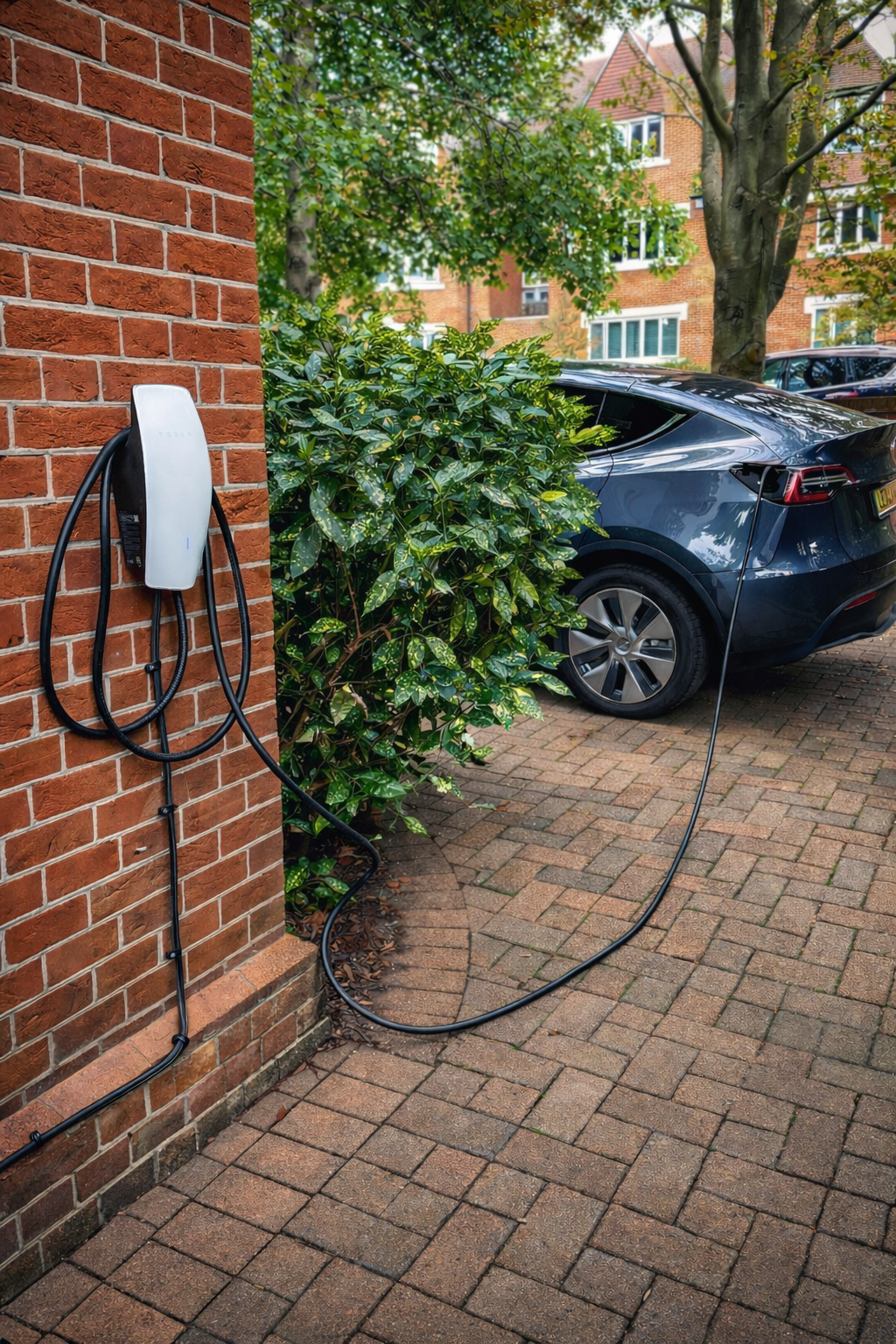
What the job involves
Checking that the supply and the consumer unit can take the extra load.
Running a cable from the board to wherever the charger is going.
Fitting and connecting the charger.
Testing and certification.
How long it takes depends on the property, on the cable route, and on whether any other electrical work is needed first.
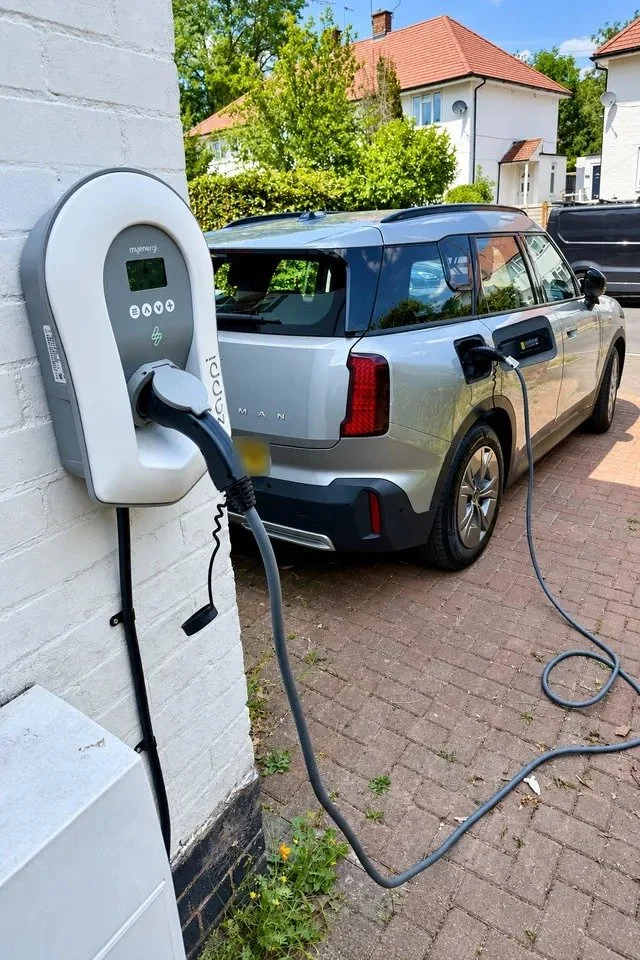
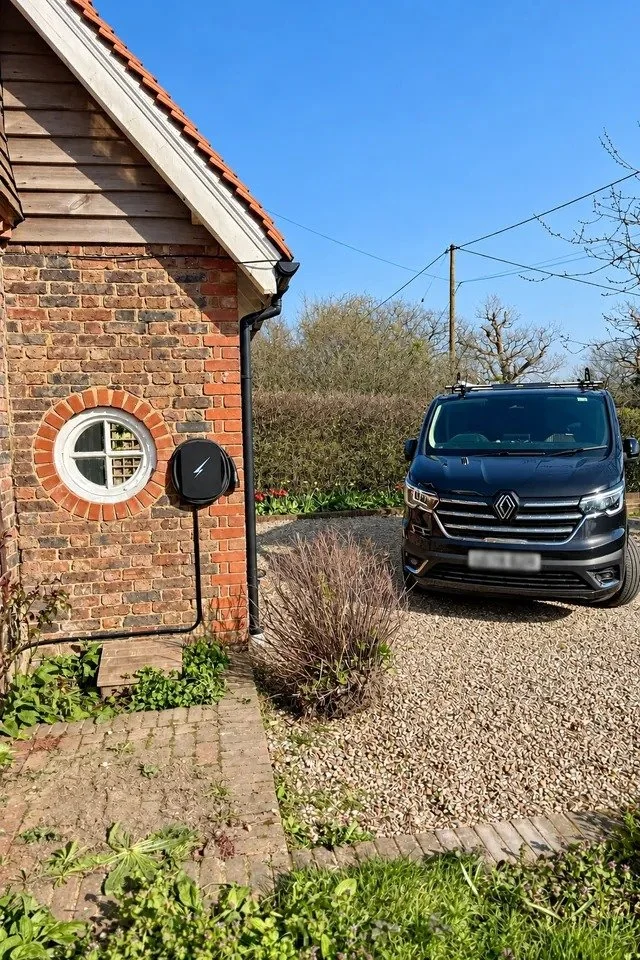
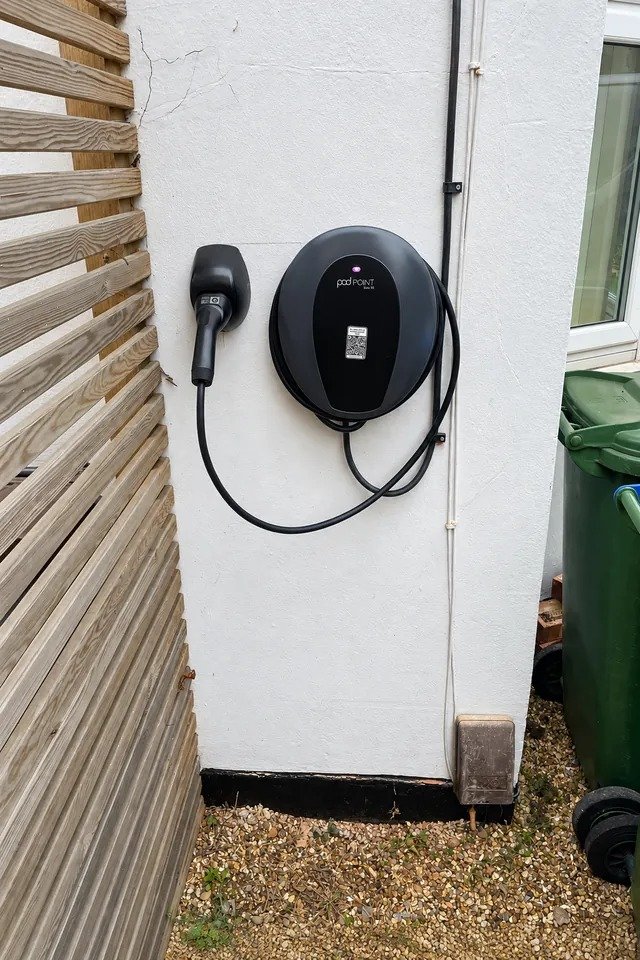
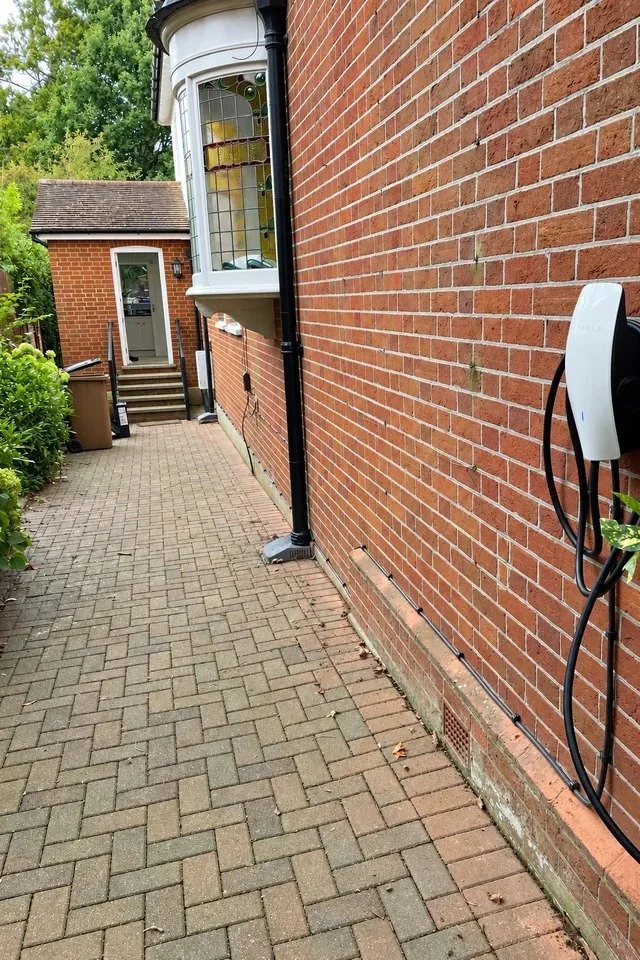
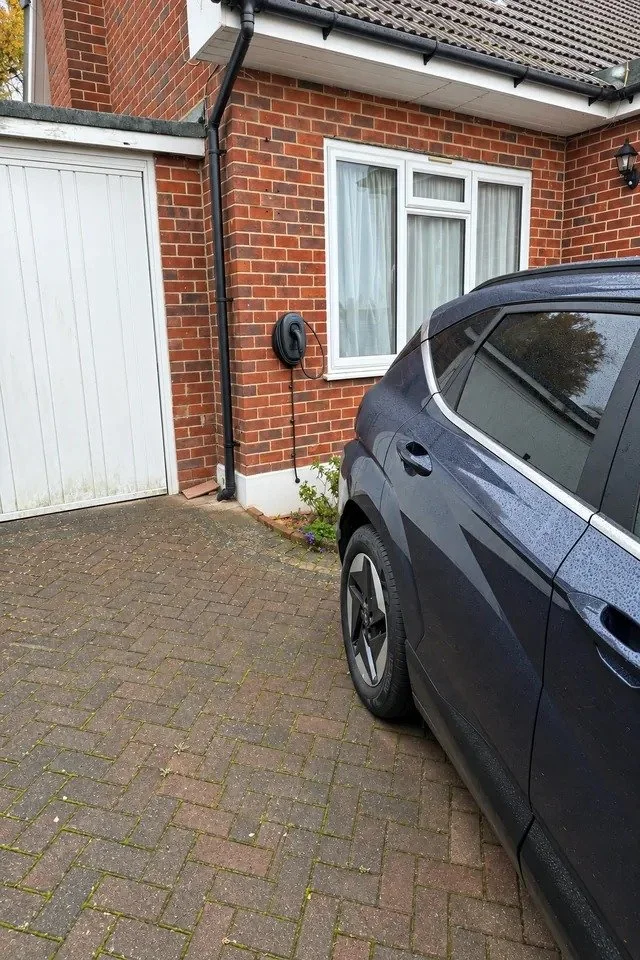
What a fitted charger looks like
Different units, on different walls, in different positions. Scroll sideways to see the rest.
Is your home suitable?
These are the main things to check, including the parts an electrician does not control.
Somewhere off the road to park
A charging cable should not simply be laid across a public footway. Without off street parking, an approved cross pavement option may be worth looking into, depending on the rules where you live.
Your consumer unit
The charger needs its own way out of the board, with the right protection. A board that is full, or older, may need work first.
Your incoming supply
Most houses have enough capacity. Occasionally a supply needs upgrading, and that work is carried out by the local network operator rather than by an electrician.
A route for the cable
From the board to wherever the charger goes. Sometimes straightforward, sometimes less so.
Choosing the charger
AJS installs Sync EV, myenergi Zappi, Pod Point, Tesla and Hypervolt chargers.
Chargers are sold by their power rating, and 7kW is the most common choice for a home. How much range an hour of charging actually adds depends on the car, so the same charger does not behave the same way on every vehicle. Faster units generally need a three phase supply, which most houses do not have.
A tethered charger has the cable attached. An untethered one means you plug your own cable in. Many units also connect to an app, which lets you set charging to run on a cheaper overnight tariff.
Common questions
How long does an installation take?
It depends on the property, the cable route and whether the consumer unit needs any work first.
Will my consumer unit need upgrading first?
Sometimes. Older or full boards do not always have room for another protected circuit. If yours does, a consumer unit upgrade can be done as part of the same job.
Do i need off street parking?
Normally, yes. A charging cable should not simply be laid across a public footway, so a driveway, garage or private parking space is the usual arrangement.
Tell us about the car and where you park
Those two, plus roughly where your consumer unit is, are what most affect the installation. EV charger installation is one of the electrical services available.